How AI Experts Can Break Down Autobooks' Competitive Edge 🚀
📈 When your invoices finally stop being a guessing game: where Autobooks fits in the payments & accounting ring
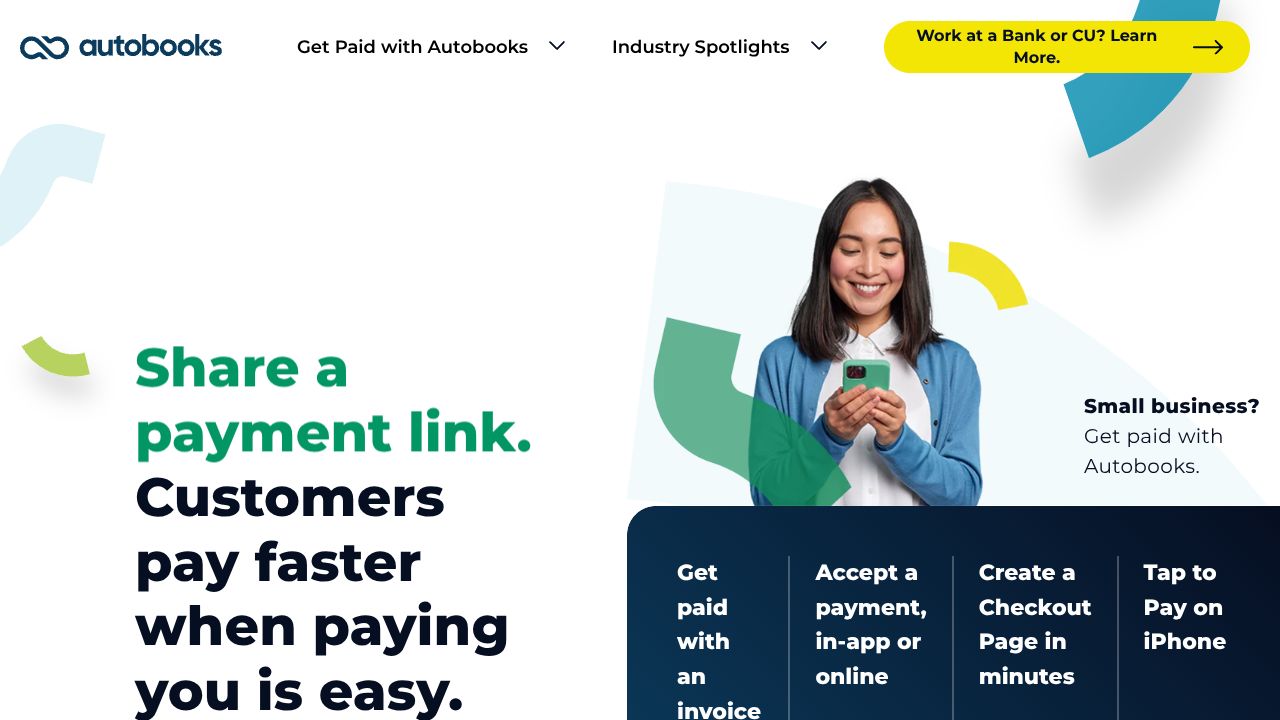
Picture this: it’s Monday morning, your inbox is full of unpaid invoices, and your bookkeeper is buried under CSVs. You want automation that actually reduces friction, not another integration project. In my 15 years watching finance tooling evolve, Autobooks aims squarely at that pain—an embedded payments + accounting stack for small businesses with automated, AI-driven invoicing. Below I compare Autobooks to the two platforms most teams size up against it: Intuit’s QuickBooks and Stripe—because in this space, accounting depth and payments telemetry both matter.
📈 Quick Comparison Table
| Feature | Autobooks | QuickBooks | Stripe |
|---|---|---|---|
| Pricing | Usually bank-embedded packages + transaction fees; lower overhead for small merchants | Subscription + payments fees; higher monthly cost for full features | Usage-based transaction fees; no monthly for payments-only |
| Ease of Use | Built for small-business simplicity, fewer knobs | Robust UI for accounting pros — steeper for casual users | Developer-first; easiest for engineers, not bookkeepers |
| Artificial Intelligence Features | AI-driven invoicing and automated categorization tailored to bank customers | Automation, receipts capture, some assistant features | Advanced ML for fraud (Radar) and analytics (Sigma) but not accounting AI |
| Integration Options | Best in embedded banking ecosystems; limited third-party marketplace | Large app marketplace (payroll, payroll tax, apps) | Extensive API ecosystem; plug into data pipelines and ML tools |
📈 Where Autobooks Wins
- Embedded simplicity for bank customers — Autobooks shines when you're a small business using a partner bank. It removes a lot of "glue code" that QuickBooks often requires and avoids the engineering lift needed to stitch Stripe payments into your ledger.
- AI-first invoicing that reduces human follow-up — Autobooks automates invoice generation and reminders in a way that beats raw Stripe (which is payments-first) and sometimes outpaces QuickBooks for straight invoicing workflows.
- Cleaner cash-flow reconciliation for non-technical teams — compared with Stripe (developer-focused) and QuickBooks (feature-dense), Autobooks is tailored to owners who want fewer settings and direct bank reconciliation without building ETL pipelines.
📈 Where Competitors Have an Edge
- Scale and accounting breadth: QuickBooks reviews consistently praise its full-spectrum accounting (payroll, tax handling, reporting). If you need enterprise-grade compliance or complex bookkeeping, QuickBooks is more mature.
- Data access & ML tooling: Stripe reviews highlight Stripe’s event-rich APIs, Radar fraud ML, and analytics (Sigma). For AI teams that need raw event streams, labeled payment data, and experiment-friendly tooling, Stripe is a far better platform to build models on.
- Ecosystem and extensibility: Neither Autobooks nor embedded bank stacks match the third-party app ecosystems that QuickBooks and Stripe expose for verticalized workflows.
📈 Best Use Cases for Artificial Intelligence
- Choose Autobooks when you want out-of-the-box AI invoicing, automated categorization, and minimal engineering. Great for small businesses and banking partners looking to add intelligent payments without a data science team.
- Choose Stripe when your AI work needs granular event data, fraud signals, or you plan to build custom ML models and pipelines (experimentation, feature engineering, model evaluation).
- Choose QuickBooks if your models must integrate with payroll, tax rules, and full accounting ledgers—where domain compliance matters as much as signal quality.
📈 The Verdict
In my experience, Autobooks is the right tool when your goal is to remove operational friction and deploy AI-driven invoicing fast—especially if you sit inside a bank ecosystem or run a lean SMB. If you’re an AI practitioner building predictive finance models, risk systems, or custom analytics, you’ll want Stripe for telemetry or QuickBooks for accounting completeness. What others won’t tell you: the “right” choice often isn’t the fanciest feature set—it’s the one that gives you the cleanest, most consistent data to feed your models.
If you’re building with these systems, start with Prompt Templates for consistent data extraction, Technique Breakdowns for feature generation, and Before/After Examples to validate model impact. Community Submissions (forums, bank partner case studies) will often surface the practical tips that docs omit—trust those.
📈 END OF PROMPT 📈
this prompt has been printed successfully
WANT MORE? GO TO THE SOURCE:
VISIT WEBSITE 🚀